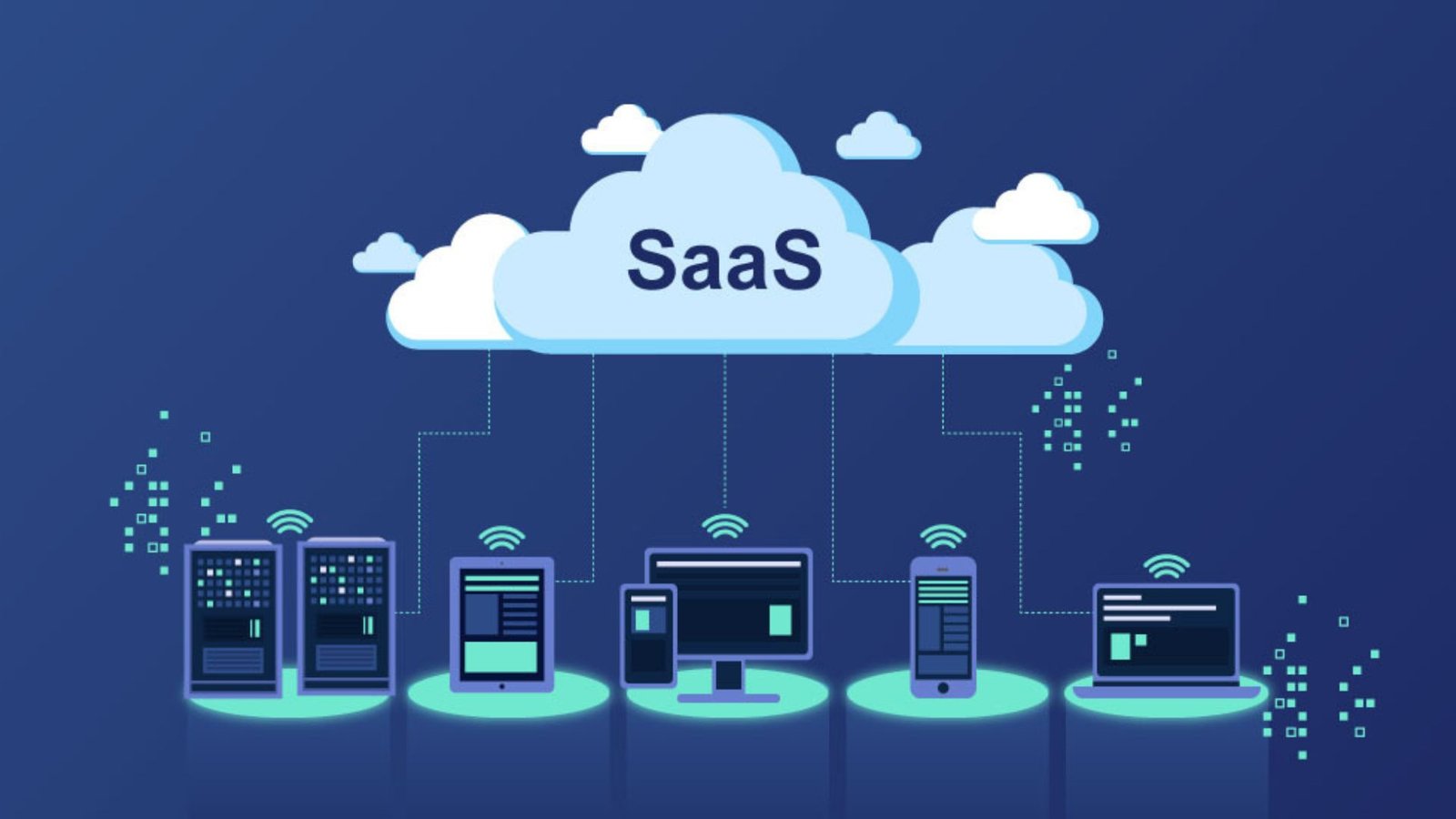
Software as a Service (SaaS) is a cloud-based software delivery model where applications are accessed over the internet instead of being installed and maintained on local computers or on-premises servers. With SaaS, businesses and individuals use software through a web browser or secure application interface, usually by paying a subscription or usage-based fee. The cloud service provider manages everything behind the scenes, including hosting, performance, security, updates, and technical maintenance.
This model removes the traditional burden of purchasing hardware, installing software, managing upgrades, and maintaining infrastructure. SaaS cloud solutions allow organizations to quickly adopt new tools, scale usage based on demand, and support remote or distributed teams with anytime, anywhere access. From productivity and collaboration tools to enterprise networking and security platforms, SaaS applications have become a core part of modern digital operations, helping organizations improve agility, reduce costs, and accelerate innovation in a fast-changing business environment.
Overview of Software as a Service (SaaS)
Software as a Service (SaaS) is one of the most widely adopted cloud computing models today. Instead of installing software on individual computers or managing it on in-house servers, businesses access applications over the internet through a subscription-based model. These SaaS cloud solutions allow organizations to use powerful software without worrying about infrastructure, maintenance, or updates.
From productivity tools and collaboration platforms to enterprise networking and security systems, SaaS applications are now central to how modern organizations operate. In 2026, SaaS continues to evolve as enterprises demand scalable, secure, and flexible digital services.
Definition of SaaS in Cloud Computing
SaaS is a cloud software delivery model where applications are hosted and managed by a cloud service provider. Users access the software through a web browser or application interface, usually by paying a recurring subscription or usage-based fee. The provider takes care of hosting, updates, security, performance, and system availability.
This model removes the burden of managing complex IT environments, allowing organizations to focus more on business outcomes rather than software operations.
How SaaS Differs from Traditional On-Premises Software
Traditional on-premises software requires businesses to purchase licenses, install software on local machines or servers, and manage updates, security patches, and hardware resources. This approach often involves high upfront costs and long deployment timelines.
SaaS platforms work differently. Software is delivered via the cloud, so there is no need for local installation. Updates are automatic, infrastructure is shared across users, and businesses only pay for what they use. This makes SaaS cloud solutions more flexible, cost-efficient, and faster to deploy.
SaaS Delivery Model Explained (Subscription & Pay-As-You-Go)
Most SaaS applications operate on a subscription or pay-as-you-go pricing model. Pricing may vary based on the number of users, features, usage levels, or service tiers. This allows businesses to scale software usage up or down based on demand.
This pricing structure also reduces financial risk. Organizations avoid heavy upfront investments and instead spread software costs over predictable monthly or annual payments.
SaaS in 2026 – Current Market Relevance & Enterprise Adoption
By 2026, SaaS is no longer just a convenience—it is a strategic foundation for digital transformation. Enterprises rely on cloud-based software to support remote teams, global operations, data-driven decision-making, and AI-driven services. SaaS adoption has become a standard practice for organizations seeking agility, resilience, and faster innovation cycles.
How Software as a Service (SaaS) Works
SaaS works through an on-demand delivery model. Instead of owning software infrastructure, customers access applications hosted in cloud environments. The provider manages everything behind the scenes, from servers and storage to updates and security.
On-Demand Software Delivery Model
SaaS applications can be activated quickly, often within minutes. Users simply log in through a browser or app and begin using the service. This on-demand model significantly reduces deployment time compared to traditional software setups.
Role of Cloud Service Providers
Cloud service providers host the SaaS applications, maintain infrastructure, ensure uptime, manage security, and deliver updates. This allows businesses to avoid building and maintaining complex IT environments internally.
SaaS Architecture & Multitenancy
Most SaaS platforms use a multitenant architecture. This means multiple customers share the same application infrastructure while keeping their data isolated and secure. This shared model reduces costs and allows providers to deliver continuous improvements across all users.
Data Hosting, Infrastructure, and IT Management
SaaS providers host application data, manage backend systems, and provide the computing resources needed to support performance and availability. Customers benefit from enterprise-grade infrastructure without having to manage it themselves.
Recurring Revenue Model for Providers
SaaS providers benefit from predictable recurring revenue, which allows them to invest in continuous improvement, security enhancements, and feature updates.
Operational Efficiency for Customers
Customers gain operational efficiency by reducing IT workloads, infrastructure management tasks, and software maintenance responsibilities. This leads to lower overhead and better focus on core business activities.
Key Features of SaaS Solutions
SaaS platforms provide a complete software delivery model that removes the complexity of traditional IT management. With SaaS cloud solutions, organizations gain access to powerful applications without needing to manage infrastructure, updates, or security internally. These features help businesses operate more efficiently while ensuring reliability, scalability, and security across digital operations.
Application Setup, Access & Maintenance
SaaS applications are pre-configured and ready to use as soon as a subscription is activated. Users can access the software through a web browser or application interface without installing anything locally. Maintenance tasks such as performance tuning, system health monitoring, and uptime management are handled by the cloud service provider, reducing the workload for internal IT teams and improving operational stability.
Automatic Updates & Technology Refresh
One of the major advantages of cloud-based software is automatic updates. SaaS providers roll out new features, performance enhancements, and security patches centrally. This ensures that all users always operate on the latest version of the software without disruption. Organizations benefit from continuous improvement without the need for manual upgrades or downtime planning.
Built-In IT Support Services
SaaS platforms include built-in technical support and service management. Providers monitor performance, address system issues, and resolve service incidents as part of the subscription. This allows businesses to rely on expert support without building large internal support teams, while also improving system reliability and user satisfaction.
Back-End Infrastructure & Programming
The entire back-end infrastructure that powers SaaS applications is managed by the provider. This includes servers, databases, computing resources, and application programming environments. Businesses can leverage enterprise-grade cloud infrastructure without investing in hardware or managing complex system architectures internally.
Data Management & Storage
SaaS cloud solutions include secure data storage, backup mechanisms, and data management services. Providers manage data availability, redundancy, and performance across cloud environments. This ensures that business-critical information remains accessible, protected, and scalable as organizational data needs grow.
Infrastructure & Facilities Security
Security is built into the SaaS delivery model. Providers manage physical data center security, network protection, system hardening, and compliance controls. This layered security approach helps protect applications and data from threats while supporting regulatory and governance requirements for enterprise environments.
Core Benefits of SaaS for Businesses
SaaS cloud solutions deliver measurable business value by reducing operational complexity, improving agility, and lowering IT costs. Organizations can adopt new software faster, scale operations more easily, and align technology usage with changing business needs.
Accelerated Time to Value
SaaS applications are available on demand, allowing businesses to deploy software in minutes instead of weeks or months. This rapid availability enables teams to start delivering results quickly, supporting faster project launches, improved productivity, and quicker returns on technology investments.
Lower Total Cost of Ownership (TCO)
The subscription-based pricing model reduces large upfront investments in software licenses and infrastructure. Since SaaS platforms operate in shared cloud environments, maintenance and operational costs are distributed across multiple users. This significantly lowers the total cost of ownership compared to traditional on-premises deployments.
Flexibility & Global Scalability
SaaS platforms are designed to scale across global cloud environments. Businesses can increase or reduce usage based on demand without infrastructure changes. This flexibility supports business growth, seasonal demand fluctuations, and global workforce expansion without performance limitations.
Automatic Software Upgrades
Software improvements are delivered automatically to all users. This ensures continuous access to new features, performance enhancements, and security updates. Organizations avoid the operational risks and downtime typically associated with traditional upgrade cycles.
Simplicity of Deployment & Proof of Concept
SaaS applications are easy to test and deploy for pilot projects or proofs of concept. Businesses can validate solutions before full rollout, reducing risk and improving decision-making. This simplicity supports faster innovation and more confident technology adoption.
Primary Business Problems SaaS Solves
SaaS addresses long-standing IT challenges by simplifying software deployment, reducing infrastructure dependency, and improving accessibility for modern workforces. Cloud-based software helps organizations operate more efficiently while supporting evolving business models.
Reducing Initial Capital Outlay
SaaS eliminates the need for upfront investments in physical servers, licenses, and infrastructure. Organizations can access enterprise-grade applications through predictable subscription pricing, freeing capital for strategic initiatives and growth-focused investments.
Eliminating High IT Maintenance Overheads
Software maintenance, patching, system upgrades, and infrastructure management are handled by the provider. This reduces the need for internal IT resources dedicated to routine maintenance tasks, allowing teams to focus on higher-value strategic projects.
Addressing Deployment Delays
Traditional software deployments often involve lengthy procurement, installation, and testing processes. SaaS platforms can be provisioned almost instantly, enabling faster onboarding of users and quicker adoption of new digital capabilities across the organization.
Supporting Distributed & Remote Workforces
SaaS applications are accessible over the internet, making them ideal for distributed teams and remote work environments. Employees can securely access tools and data from anywhere, supporting modern hybrid work models.
Accessibility & Anytime-Anywhere Usage
Cloud-based access ensures that users can work across devices and locations without dependency on internal networks. This improves collaboration and productivity for geographically distributed teams.
Simplified End-User Experience
SaaS platforms are designed for usability and consistency across devices. This reduces training requirements and improves user adoption across departments and business units.
SaaS in Networking and Infrastructure Management
SaaS is increasingly used to manage complex networking environments. Cloud-based network management platforms provide centralized visibility, control, and automation across distributed infrastructure.
- What SaaS in Networking Means: SaaS in networking refers to delivering network management, monitoring, and optimization tools through cloud platforms. Organizations can manage network performance without hosting management systems on-premises.
- Cloud-Based Network Planning & Monitoring: Cloud-hosted networking tools allow teams to plan network architecture, monitor performance, and track usage patterns in real time. This improves operational visibility and enables proactive issue resolution.
- SaaS for Network Performance Optimization: SaaS platforms provide analytics and automation tools that help optimize network performance. This improves reliability, reduces downtime, and enhances user experience across enterprise environments.
- Role of AI-Driven Network Management: AI-driven SaaS platforms analyze network behavior, detect anomalies, and automate troubleshooting. This reduces operational complexity and improves service quality through predictive insights.
- SaaS for Hybrid and Multi-Cloud Networking: SaaS enables centralized management across hybrid and multi-cloud environments, allowing organizations to maintain consistent network policies and performance standards across distributed cloud infrastructures.
Service Options and Customization in SaaS
SaaS platforms offer flexible service models and customization options to meet diverse business requirements while maintaining scalability and future compatibility.
Out-of-the-Box SaaS Deployment Models
Standard SaaS offerings provide ready-to-use applications that require minimal configuration. These models support rapid deployment and are ideal for organizations seeking fast adoption with minimal setup complexity.
Hybrid Cloud and On-Premises SaaS Configurations
Some SaaS solutions support hybrid deployment models, where application interfaces are cloud-hosted while certain components or data remain on-premises. This approach supports regulatory, performance, or integration requirements.
- Customization & Forward Compatibility: SaaS platforms allow configuration and customization to align with business workflows. However, customization should be implemented carefully to ensure compatibility with future updates and platform enhancements.
- Interoperability Considerations: SaaS solutions must integrate smoothly with existing enterprise systems. Interoperability ensures seamless data exchange and operational continuity across platforms.
- Third-Party Technology Integrations: Modern SaaS platforms support integration with third-party tools through APIs and connectors. This enables organizations to build connected digital ecosystems without complex development efforts.
Common Use Cases of SaaS Across Industries
SaaS platforms support a wide range of business functions, from daily productivity to advanced enterprise operations. These use cases demonstrate the versatility of SaaS cloud solutions across industries.
- Productivity Applications: SaaS productivity tools enable document creation, communication, and workflow management through cloud-based interfaces. These tools support collaboration and remote work environments.
- Collaboration & Project Management Tools: Cloud-based collaboration platforms allow teams to communicate, share files, and manage projects in real time. This improves coordination and operational efficiency across departments.
- Customer Relationship Management (CRM): CRM SaaS platforms centralize customer data, sales workflows, and service interactions. This improves customer engagement, reporting accuracy, and revenue operations.
- Specialized Industry Applications: Industry-specific SaaS solutions support sector-focused workflows, compliance needs, and operational requirements across media, finance, healthcare, and more.
- Media Production Platforms: Cloud-based media tools enable content creation, editing, and publishing without requiring local processing infrastructure.
- Financial & Accounting SaaS Tools: SaaS accounting platforms simplify financial reporting, invoicing, and compliance management through centralized cloud systems.
- Document Management & Digital Signatures: SaaS platforms streamline document storage, approvals, and digital signature workflows, improving efficiency and compliance in document-driven processes.
Enterprise SaaS and Modern Cloud Strategy
SaaS is a core pillar of modern enterprise cloud strategy. Organizations use SaaS platforms to modernize IT operations, improve agility, and support digital transformation initiatives.
- SaaS for IT Operations & Multi-Cloud Management: SaaS tools centralize visibility and control across multiple cloud environments. This simplifies infrastructure management and supports consistent governance across platforms.
- AI-Assisted SaaS for Infrastructure Performance: AI-powered SaaS platforms provide predictive analytics and automation for infrastructure management. This improves uptime, performance optimization, and proactive issue resolution.
- SaaS Adoption in Enterprise Digital Transformation: SaaS supports digital transformation by enabling rapid deployment of new services, modernizing legacy systems, and supporting cloud-native workflows.
- SaaS for Business & Education Sectors: Organizations in both business and education sectors use SaaS to support collaboration, learning platforms, and operational efficiency.
- “Everything as a Service” Enterprise Strategy: The shift toward service-based consumption models reflects a broader move toward flexible, usage-based IT models that reduce ownership complexity and improve scalability.
- SaaS for Networking by HPE Juniper Networking: Enterprise networking is increasingly managed through SaaS platforms that deliver cloud-native, AI-driven network management and security solutions.
- Cloud-Native Networking SaaS Solutions: Cloud-native SaaS networking platforms provide centralized visibility and management across wired, wireless, and cloud-based network environments.
- AI-Driven SaaS Network Management Platforms: AI-driven platforms use analytics and automation to improve network reliability, performance, and user experience across distributed infrastructures.
- Mist AI-Driven Service Assurance
- Security Director Cloud
- Juniper Paragon™ Automation
- Juniper Apstra Intent-Based Networking: These solutions demonstrate how SaaS cloud solutions enable advanced networking, security, and automation for modern enterprise environments.
Why SaaS Is a Strategic Choice for Modern Enterprises
SaaS enables organizations to operate with greater agility, cost control, and scalability. By shifting software delivery to cloud-based platforms, enterprises can modernize operations and respond quickly to market changes.
- Business Agility & Speed to Market
- Operational Efficiency & Cost Predictability
- Scalability for Growing Organizations
- Long-Term Cloud Transformation Readiness
SaaS cloud solutions support sustainable growth by aligning technology consumption with evolving business needs.
FAQs
Yes, many SaaS providers support compliance and regulatory requirements through security controls and governance frameworks.
Cloud-based infrastructure allows for redundancy, backups, and faster recovery.
Modern SaaS platforms offer APIs and connectors for integration with existing systems.
Challenges include data migration, integration complexity, and change management.
Providers offer region-based data hosting and compliance support options.
SaaS provides ready-to-use applications, while managed services involve outsourced management of IT systems.
IT teams shift focus from maintenance to strategic initiatives and optimization.
Yes, enterprise SaaS platforms are designed to support complex, high-volume workflows.
ROI is measured through cost savings, productivity gains, and faster deployment times.
AI integration, automation, and deeper multi-cloud support will continue to shape SaaS evolution.