
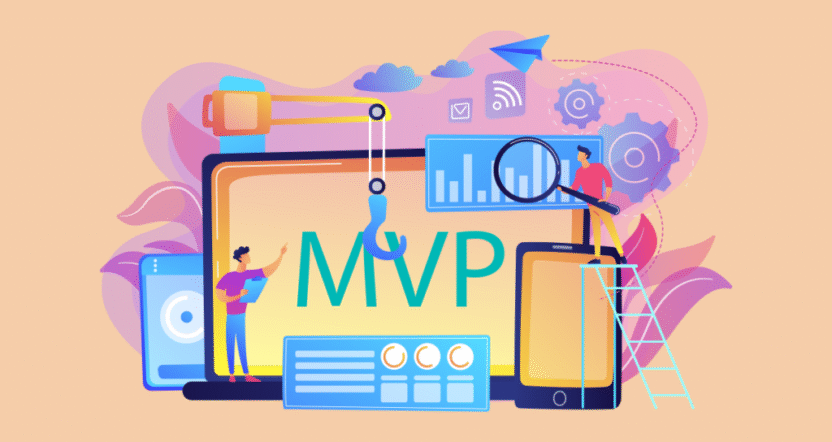
MVP Development for SaaS Startups: A Complete Guide is your roadmap to launching a lean yet powerful product. In the SaaS world, speed matters. Launching a full product with every feature invites risk. Building a minimum viable product (MVP) helps you test, learn & grow without blowing your budget. In this blog, you will learn MVP Development for SaaS Startups: A Complete Guide, a step-by-step process, best practices, tools & how to measure success.
Why MVP Development for SaaS Startups: A Complete Guide Matters
The startup world is crowded. The cost of building a bloated product is huge. The failure rate remains high because many startups build too much too soon. The smart approach is to build something minimal that solves a key pain point, get feedback & iterate. The result is lower risk, faster time to market & better alignment with real user needs.
The SaaS market continues to expand. New trends like low-code platforms are helping SaaS projects move faster. The pressure is on to validate ideas quickly. The difference between success & failure often lies in how sharply you use MVP strategy.
Key Principles in MVP Development for SaaS Startups: A Complete Guide
Building an MVP for SaaS is different from building a traditional app. Here are the guiding principles:
- Focus on Core Problem & Value: The MVP should deliver the core value—just enough to solve one main pain. Avoid trying to please everyone in Version 1. Early users will guide you to the rest.
- Build for Feedback, Not Perfection: We focus on learning. Launch quickly, collect data & iterate. Every feature beyond the core is a distraction until validated.
- Design for Scalability & Modularity: They choose an architecture that can scale. Use modular code, clean APIs & design patterns so you can extend without rewriting.
- Use Reusable Components & Open Source: It saves time. Use open source libraries, frameworks & third-party services for auth, billing, analytics & notifications. Focus on core functionality.
- Keep Team Lean & Agile: These small cross-functional teams move fastest. Use agile or lean development cycles. Short sprints, rapid releases & iterative changes.
Step-by-Step Process in MVP Development for SaaS Startups: A Complete Guide
- Concept & Market Research: They define target users, study competition & validate pain. Interview potential users. Define your unique value.
- Define MVP Scope: We use prioritization frameworks like MoSCoW or RICE to pick must-have features only.
- Design & Wireframing: These create user flows, low-fidelity wireframes & prototypes to test usability early.
- Choose Tech Stack & Architecture: They select backend, frontend, database, cloud services & frameworks. Ensure the stack supports scaling.
- Develop Core Features: We implement the must-have feature set. Use iterative development with frequent demos & reviews.
- QA, Testing & Bug Fixing: They run manual tests, automated tests & edge cases. Fix critical bugs before launch.
- Beta Launch & Early Feedback: It releases to a small group of early users. Collect feedback, usage data, feature requests & pain points.
- Iterate & Improve: These refine features, add based on validated demand & remove what fails. Continue cycles until product-market fit.
Tools & Platforms in MVP Development for SaaS Startups: A Complete Guide
| Tool Type | Use Case | Example | Benefit |
|---|---|---|---|
| Backend Framework | Build server logic & APIs | Django, Ruby on Rails, Node.js | Faster prototyping & many libraries |
| Frontend Framework | UI & client logic | React, Vue, Angular | Component ecosystems & reusability |
| Cloud / Hosting | Deploy & scale | AWS, Google Cloud, Azure | Scalability & managed infrastructure |
| Databases | Data storage | PostgreSQL, MongoDB | Reliability & growth support |
| Authentication / Payments | Services to save build time | Auth0, Stripe | Handles security & billing out of box |
| Analytics | User tracking & metrics | Mixpanel, Google Analytics | Insight into user behavior |
Choosing a stack you & your team are familiar with often trumps the trendiest tech.
Best Practices in MVP Development for SaaS Startups: A Complete Guide
- Validate Before You Code: They validate user pain & willingness to pay first.
- Prioritize Ruthlessly: These stick to core features. Every extra feature delays launch & adds cost.
- Build Analytics Early: It bakes in tracking from day one so you can measure behavior immediately.
- Use Feature Flags & Toggles: We enable or disable features safely as we test.
- Deploy Continuously: They release frequent small updates to reduce risk & adjust fast.
- Maintain Clear Documentation: These documents the architecture, APIs & user flows to avoid chaos later.
- Set Measurable Goals & KPIs: They track growth, retention & engagement metrics to guide decisions.
- Plan for Future Scaling: We ensure architecture can evolve (modular code & separation of concerns) so MVP does not become a constraint.
Metrics to Track in MVP Development for SaaS Startups: A Complete Guide
- Activation Rate: Percentage of users who experience the aha moment
- Retention / Churn: How many users stay over time
- Engagement: Feature usage, session times, active users
- Conversion Rate: From free trial to paid or signup to next step
- Customer Acquisition Cost (CAC)
- Lifetime Value (LTV)
- Feedback & NPS: Net Promoter Score & survey responses
These metrics guide your decisions on which features to build next or drop.
Challenges & Risks
- Building too much too soon (feature bloat)
- Ignoring user feedback & building for yourself
- Technical debt if code quality is poor
- Security & compliance risks if ignored early
- Poor user onboarding leading to drop-off
- Choosing a stack that your team cannot maintain
Being mindful helps avoid common traps SaaS startups face.
Emerging Trends in MVP Development for SaaS Startups: A Complete Guide
- Low-Code / No-Code Tools: These platforms make it easier to prototype SaaS quickly. Some startups deliver first versions using low-code then migrate to custom code.
- AI-Assisted Prototyping & Code Generation: They generate boilerplate code or suggest UI layouts automatically to move faster.
- User-Driven & Modular MVPs: These deploy modular mini-apps or feature slices to test multiple hypotheses.
- Continuous Delivery & Feature Flag Ecosystems: They ship features hidden behind flags, tested in production & rolled out gradually.
- Focus on Customer Success from Day One: These embed support, onboarding & in-product guidance early to drive retention.

Conclusion
MVP Development for SaaS Startups: A Complete Guide should be your compass for launching lean, learning fast & building value deliberately. The journey begins with a sharp idea, ruthless prioritisation, clean tech choices, early feedback loops & data-driven decisions. When you follow this guide, your MVP becomes a growth engine, not just a prototype. You validate market demand, reduce waste & build a foundation that scales with your vision.